Sadhana · Classical Yoga · Non-Dual Dharma

The yoga
that unfolds
you.

Ancient precision. Contemporary understanding. One direction.

"The arrow can never reach the target, because the target cannot be conceived. Yet we still shoot arrows in that direction."

— Amman Advaita, on the Ashtavakra Gita
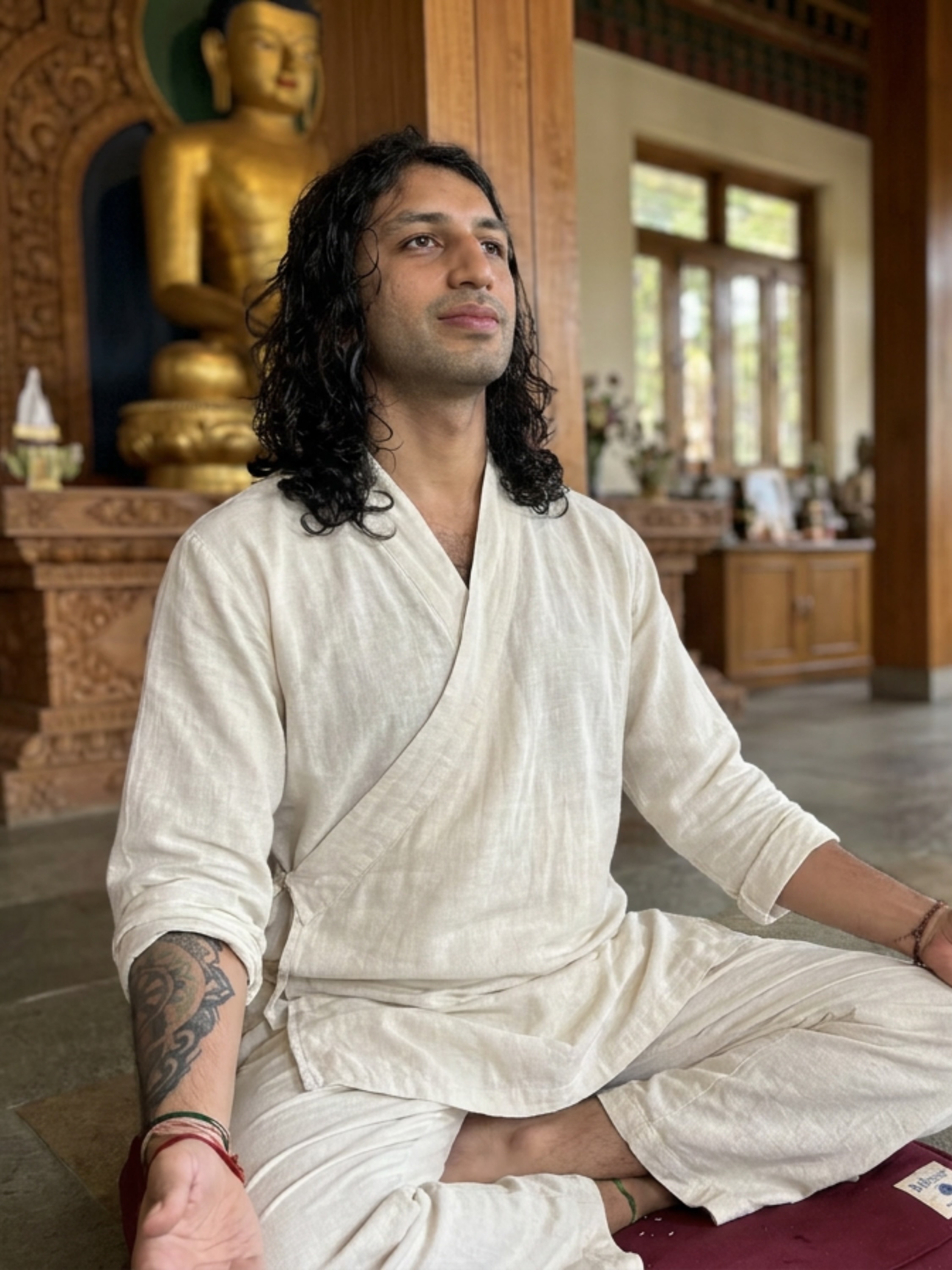
Amman Advaita teaching
Sadhana · Goa, India · Teaching globally

The same truths.
Approached from
different paths.

The flower of wisdom opens petal by petal. Each petal a different approach to the same centre. The body. The breath. The mind. And what remains when you stop looking for it.

Classical Yoga is a system of systems. Each practice — āsana, prāṇāyāma, Kriya, mantra, meditation — addresses a different layer of human experience. Understood separately, they are techniques. Understood together, they are architecture.

The Sadhana

Five disciplines.
One direction.

01 — Earth
Haṭha Yoga

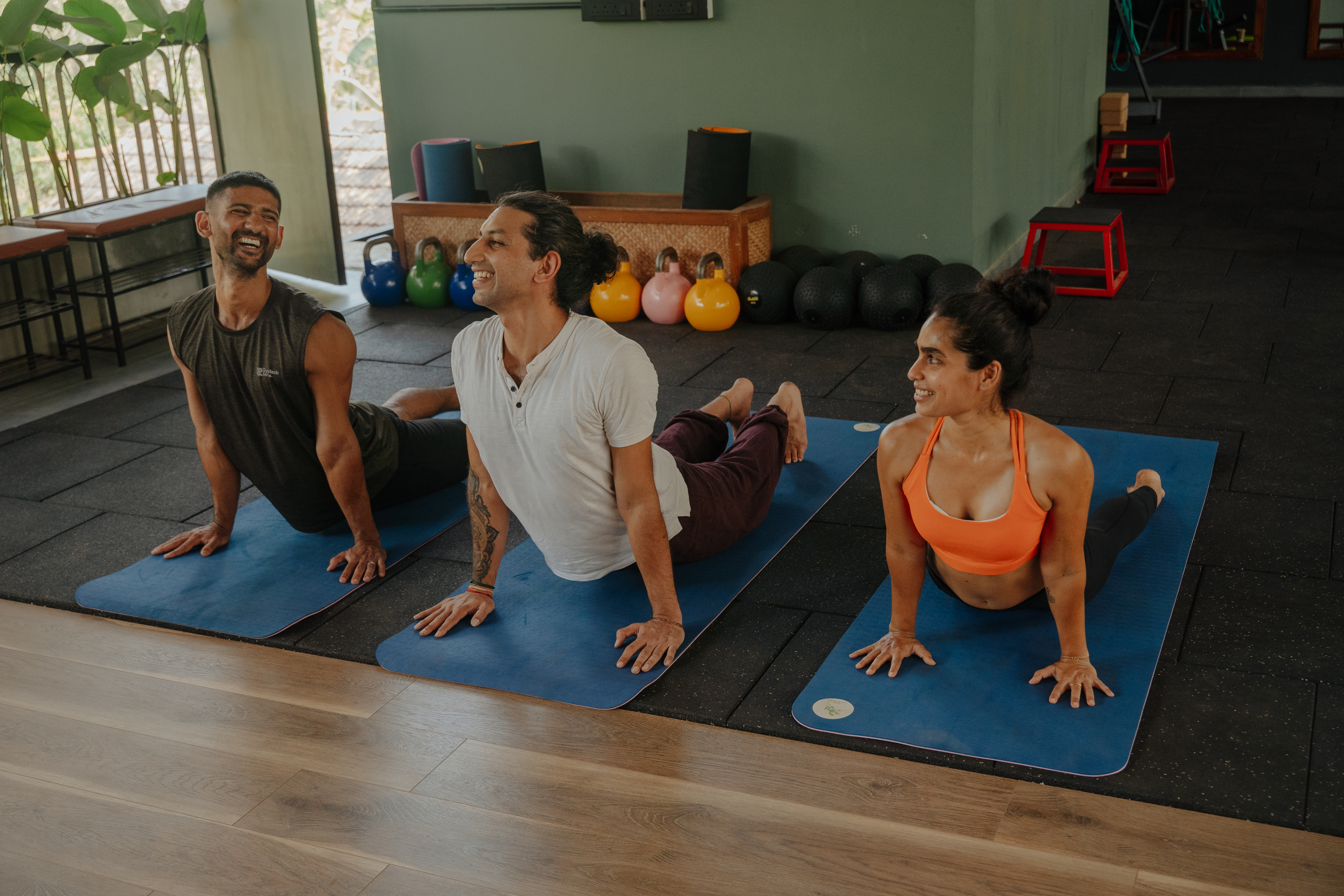
A full-spectrum practice addressing the body, the breath, and the prāṇic field. Seventy-five minutes. Daily and weekly.

Explore
02 — Metal · Space
Sound & Vibration

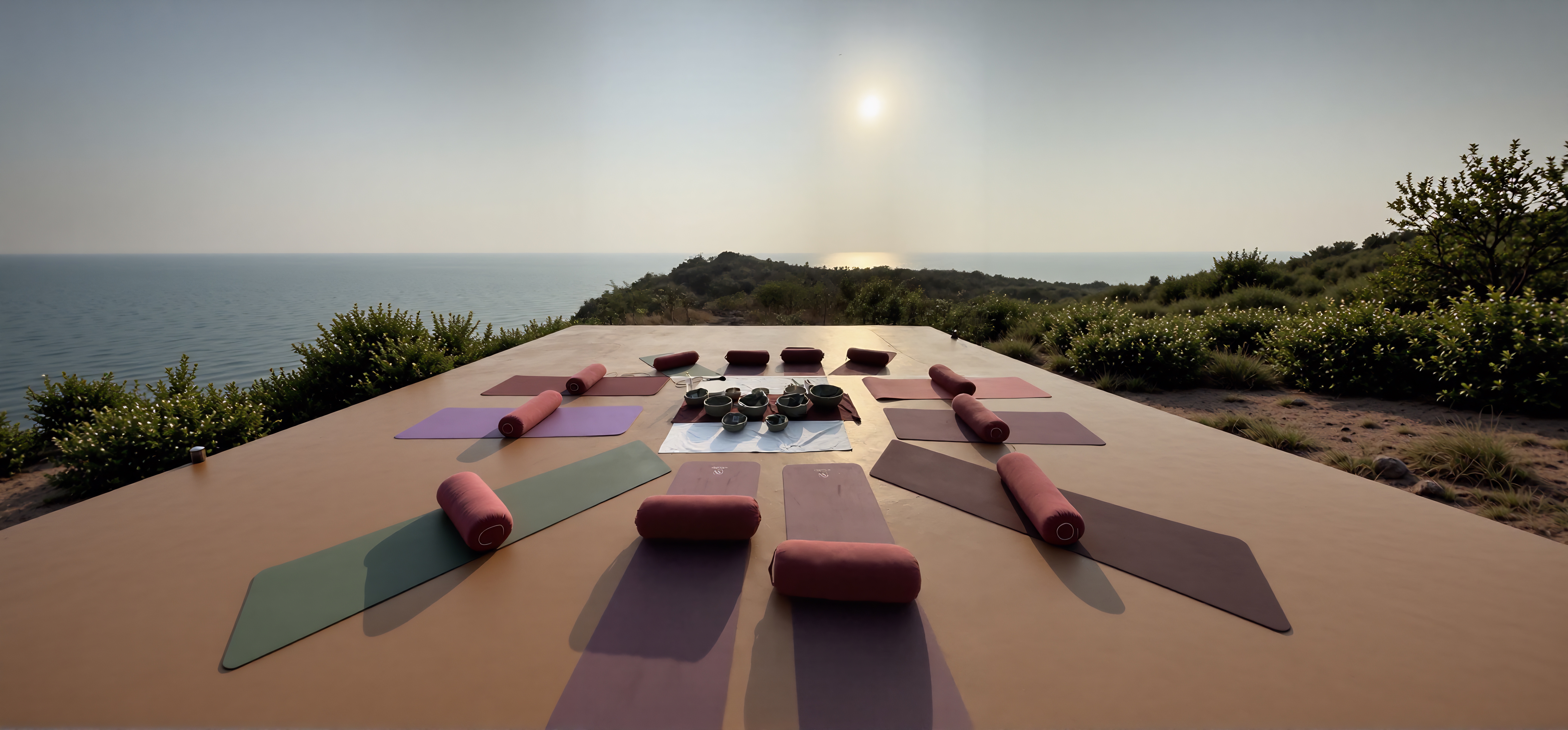
Consciousness addressed through frequency. Singing bowls, gongs, and sacred instruments in a seventy-five minute meditation.

Explore
03 — Water
Living Philosophy

The Ashtavakra Gita as contemplative study. The most radical non-dual text in the Vedic canon.

Explore
04 — Wind · Wood
Mantra

The vibratory science of sound. Each syllable a map of the universe, and a map of the one chanting it.

Explore
05 — Fire
Advanced Mentorship

One-on-one guidance for committed practitioners. By application only.

Explore

"The poison is not in the object. It is in how the object appears in your mind — and in the mind that refuses to look at that honestly."

Student Voices

From those who have studied.

"

Practising with Amman was truly an incredible experience. It made us realise how important it is to take yoga more seriously as a path toward a healthier and more balanced life. The sound healing session was equally extraordinary.

Forum Synergy
EO Jaipur
"

Amman has a wonderful energy that he brings to his space while teaching. His immense passion, love, and dedication for Yoga and its deeper philosophy is inspiring. My guidance under Amman has been transforming.

Pooja S.
Student, Goa
"

I never connected with yoga until I tried Amman's class in Goa. Now, his online sessions are essential to my wellbeing and my understanding of myself.

Rinku J.
Online Student
From the Writing

Recent essays.

May 2025 The Erasure of Authentic Yoga Practice
Dec 2025 Knees beyond fear, ankles beyond reaction
Nov 2025 The Real Chakras
Mar 2025 Why Choosing a Yoga Teacher Is a Strategic Decision
Amman Advaita
The Teaching

The body.
The mind.
And what precedes both.

Classical Yoga is a precise technology for understanding the nature of experience, and for changing your relationship to it at the root.

The teaching begins with the body. Structural alignment, breath mechanics, the prāṇic field, the purification practices that prepare the nervous system for deeper work. Students arrive with back pain, stress, scattered attention. The practice addresses all of this directly.

Every technique, āsana, prāṇāyāma, Kriya, mantra, is pointing toward a single recognition: the same truth approached from different angles, like a sculptor working around a single form, until something is seen that was always present and always available.

"When you look for the one who is asking the question, you cannot find them. What you find instead is the space within which the question arose."

The Tantric sciences hold that reality, the body, the senses, the objects of experience, is the very substance of liberation. The relationship between the mind and reality is what changes through practice.

The image from the texts: the peacock survives on poisonous plants, and because of how it metabolises them, its plumage becomes more vivid. Fear examined closely enough always reveals something asking for attention. What appears as obstacle becomes, in the hands of someone who knows how to work with it, the substance of the path.

The classical texts converge on a single answer to the most fundamental question available to a human being: what is the nature of the awareness in which all experience appears? The Ashtavakra Gita, the Yoga Sūtras, the major Upanishads all point here. The meditation practices make that answer available as direct experience.

The world is a kind of magic show. When genuine astonishment arises at the power of mind, consciousness, the universe working through us, the practice becomes wonder. That shift is available.

Practice has been continuous since age fourteen: āsana, prāṇāyāma, Kriya, mantra, and meditation without interruption. The first Vipassana retreat at seventeen. Fifteen years of formal study of the root texts: the Amṛtasiddhi, Vāsiṣṭha Saṃhitā, Śiva Sūtras, Prajñāpāramitā, Ashtavakra Gita, the Yoga Sūtras, Haṭharatnāvalī, Gheraṇḍa Saṃhitā, and the major Upanishads. Work in energetic healing, distance healing, and direct practice with altered states long before those experiences had names.

The texts arrived as confirmation of what direct experience had already shown. The teaching comes from that order. What this produces is precision — the ability to see what a person is carrying and identify the exact point where practice can meet it.

"Look at what is already here, more carefully than you have looked before."
Haṭha Classical āsana and prāṇāyāma taught with therapeutic precision: structural alignment, breath mechanics, the science of the prāṇic field
Kriya The purification practices of the classical system: Shatkarma and the yogic Kriyas that prepare the body and nervous system for sustained inner work
Mantra Mantra as technology: the vibratory mechanics of sound drawn directly from the root texts, with three levels of meaning at each syllable
Dhyāna Meditation rooted in the non-dual contemplative sciences: the direct recognition of awareness as the ground of all experience
Texts Amṛtasiddhi · Vāsiṣṭha Saṃhitā · Śiva Sūtras · Prajñāpāramitā · Ashtavakra Gita · Yoga Sūtras of Patañjali · Haṭharatnāvalī · Gheraṇḍa Saṃhitā · Haṭha Yoga Pradīpikā · The major Upanishads
Join the circle

Subscribe to receive teachings, practices, and essays.

Writing

Philosophy
made useful.

Rigorous, counter-cultural, written for those who sense that what they are doing on the mat is pointing toward something larger. Essays that ask the reader to look more carefully at what is already in front of them.

Offerings

Five disciplines.
One direction.

Each offering addresses a different layer of human experience. Each points toward the same recognition.

01 — Earth · Daily & Weekly · In-person & Online

Haṭha Yoga

A full-spectrum classical practice. The body as the first instrument of inquiry.

Explore
02 — Metal · Space · Immersive · Group & Private

Sound & Vibration

Consciousness addressed through frequency. Ancient instruments, measurable effects.

Explore
03 — Water · Study · The Ashtavakra Gita

Living Philosophy

The most radical non-dual text in the Vedic canon. Studied as a contemplative practice.

Explore
04 — Wind · Wood · Chanting · Group & Individual

Mantra

The vibratory science of sound. Each syllable a map of the universe, and a map of the one chanting it.

Explore
05 — Fire · 1-on-1 · By Application

Advanced Mentorship

For those ready to go further than a class can take them. By application only.

Explore
Immersion · June 2026

The Bombay Retreat

A multi-day immersion at The Lighthouse, Uttan — a luxury resort on the outskirts of Mumbai. All five disciplines in sequence over several days. Limited places. The body is worked hard. The mind is given space to settle.

When
June 2026
Where
The Lighthouse, Uttan, Mumbai outskirts
Places
Limited
Begin
1 of 10
What is your name?
What brings you here?
How long have you been practicing?
I'm just beginning
Less than a year
1 to 3 years
3-10 years
More than 10 years
What draws you most right now?
Working the the body - alignment, breath, physical practice
Sound healing and meditation
Philosophy and contemplative study
Mantra and chanting
One-on-one mentorship and deeper guidance
I'm open to whatever is right for where I am
What does your current practice look like?
Is there something specific you are working with?
Optional
Where are you based?
Goa
Elsewhere in India
Abroad
In-person, online, or either?
In-person only
Online only
Either works
Anything else before we connect?
Optional
Your email address.

Received.

Every message is read personally. You will hear back within 48 hours.

Location
Siolim, North Goa · Teaching across India and online globally
Response
Within 48 hours
Follow
Subscribe

Sadhana · Goa

Every path begins
through connection.

Enquire about working with Amman directly.

1 of 10
What is your name?
What brings you here?
How long have you been practicing?
I'm just beginning
Less than a year
1 to 3 years
3-10 years
More than 10 years
What draws you most right now?
Working the the body - alignment, breath, physical practice
Sound healing and meditation
Philosophy and contemplative study
Mantra and chanting
One-on-one mentorship and deeper guidance
I'm open to whatever is right for where I am
What does your current practice look like?
Is there something specific you are working with?
Optional
Where are you based?
Goa
Elsewhere in India
Abroad
In-person, online, or either?
In-person only
Online only
Either works
Anything else before we connect?
Optional
Your email address.

Received.

Every message is read personally. You will hear back within 48 hours.

01 · Earth · Daily & Weekly

Haṭha Yoga

The body as the first instrument of inquiry. Classical practice, therapeutic precision, ancient texts.

The Practice

A seventy-five minute class moves through the full classical sequence: mantra to open, Kriyas to purify, Sūrya Namaskār with breath synchronisation, long-held therapeutic āsanas across seven movement planes, prāṇāyāma, and a closing period of resting in natural awareness. Each element prepares the ground for the next.

Structural alignment, breath mechanics, the prāṇic field — these are the actual architecture of the body, addressed with therapeutic precision. Props are tools for depth. The practice is suitable for all levels. The level of internal engagement deepens with time.

WhereIn-person: Siolim, Aldona, Anjuna, North Goa · Online: all time zones
Format75-minute classes · group and private options
LevelAll levels. No prior experience required.
The Research

A 2019 meta-analysis found yoga interventions produced significant reductions in chronic lower back pain — comparable to physical therapy, with additional effects on psychological wellbeing.1

Sama Vṛtti prāṇāyāma activates the parasympathetic nervous system through vagus nerve stimulation, measurably reducing cortisol within a single session.2

Long-held āsana combined with breath regulation increases interoceptive accuracy — a measurable predictor of emotional regulation and resilience.3

1 Wieland et al. (2019). Cochrane Database of Systematic Reviews. 2 Zaccaro et al. (2018). Frontiers in Human Neuroscience. 3 Farb et al. (2013). Frontiers in Psychology.
Ready to begin?

Enquire about classes

02 · Metal · Space · Immersive

Sound & Vibration

Consciousness addressed through frequency. Ancient instruments, measurable effects, brainwave entrainment.

The Practice

A seventy-five minute sound meditation draws from crystal and Tibetan singing bowls, the storm drum, rain stick, and gongs. The instruments are selected and sequenced to move the listener through increasingly deep states of internal quiet, arriving at a quality of attention the texts describe as the witness: awareness observing without being moved.

The Vedic understanding of OM as the primordial vibration finds its parallel in modern physics. String theory posits that the fundamental constituents of matter are vibrating strings of energy. At the atomic level, protons and neutrons are in constant oscillation. The instruments work at this level of reality.

Certain instruments invoke specific qualities of awareness associated with the natural forces the ancient tradition named and recognised: the rain stick calls the quality of releasing, the gong calls the quality of dissolving.

Format75-minute lying meditation · group and private sessions
WhereIn-person, Goa · available for corporate and retreat bookings across India
LevelNo experience necessary
The Research

Singing bowls produce binaural beats. Delta and theta binaural beats (0.5–7 Hz) are associated with deep rest, creativity, and reduced anxiety.4

A 2014 study found sound meditation significantly reduced tension, anger, fatigue, and depressed mood — effects measurable after a single session.5

EEG studies show sustained sound bath exposure produces measurable shifts from beta to alpha and theta states: the brainwave signatures of deep meditative absorption.7

4 Wahbeh et al. (2007). Journal of Alternative and Complementary Medicine. 5 Goldsby et al. (2017). Journal of Evidence-Based Integrative Medicine. 7 Hinterberger et al. (2014). Journal of Neurotherapy.
Ready to begin?

Enquire about sessions

03 · Water · Contemplative Study

Living Philosophy

The Ashtavakra Gita — the most radical non-dual text in the Vedic canon. Studied as a contemplative practice.

The Text

The Ashtavakra Gita predates the Bhagavad Gita and shares its directness. Where the Bhagavad Gita walks the seeker along the path, the Ashtavakra Gita points directly at the destination. It is a dialogue between the sage Ashtavakra and King Janaka: a king who has arrived at the threshold of understanding and needs only a single pointing-out to recognise what has always been present.

The text states, without qualification, that liberation is available in this moment, to this awareness, as it is. The body, ethics, and mind are the three foundations it establishes. From that foundation it dives into the nature of pure consciousness. In twenty chapters, it offers a complete description of the non-dual recognition that all other practices prepare for.

Studying this text is itself a contemplative practice. Each verse is a pointer. The study sessions combine mantra, contemplation of the Sanskrit, discussion, and periods of silent inquiry, so that the philosophy moves from concept into direct experience.

FormatWeekly study sessions · online and in-person
LevelOpen to all. Prior philosophy study welcomed but not required.
CurrentOngoing cohort. Contact to enquire about joining.
Why This Text Now

The Ashtavakra Gita's central claim — that the sense of being a separate bounded self is a cognitive construction — is now supported by research in predictive processing and default mode network neuroscience.

Studies using fMRI show that experienced meditators demonstrate measurably reduced activity in the default mode network during meditation. This reduction correlates with reported states of non-dual awareness.8

The text's method of direct self-inquiry corresponds to what contemporary researchers call "decentering" — now a primary clinical tool in the treatment of anxiety and depression.9

8 Brewer et al. (2011). PNAS. 9 Fresco et al. (2007). Behavior Therapy.
Ready to begin?

Enquire about study

04 · Wind · Wood · Chanting

Mantra

The vibratory science of sound. Each syllable a map of the universe, and a map of the one chanting it.

The Practice

Mantra practice is offered here as a group chanting meditation: a practice of recognising the forces of the natural world as present within the one chanting. The sun, the rain, the intelligence moving through ecosystems and bodies alike. These are what the ancient mantras name. Chanting is the act of recognising those qualities within oneself.

The Vedic understanding of mantra is that each syllable operates at three levels simultaneously: the outer level of meaning, the inner level of energetic resonance, and the secret level of direct transmission. The Guru Mantra begins this way — Guru Brahma, Guru Vishnu — recognising that the forces of creation, preservation, and dissolution in the universe are qualities of one's own awareness.

In Sanskrit, the word mantra contains two roots: manas (mind) and tra (to cross). A mantra is a vehicle for crossing the mind, for moving attention from object-orientation into its own nature as the ground of all objects.

FormatGroup sessions in Goa as seva · private sessions available
LevelNo prior knowledge of Sanskrit required
The Research

Mantra chanting synchronises respiratory rhythm, heart rate variability, and baroreflex sensitivity — producing measurable cardiovascular benefits comparable to slow pranayamic breathing.10

Studies on the OM vibration show it produces a specific pattern of vagal stimulation corresponding to the electrical vagal stimulation used in epilepsy treatment.12

Group chanting synchronises brainwaves between participants through neural entrainment, producing shared states of coherence that individual practice does not replicate.13

10 Bernardi et al. (2001). BMJ. 12 Srinivasan (2015). International Journal of Yoga. 13 Bhattacharya et al. (2019). Frontiers in Psychology.
Ready to begin?

Enquire about sessions

05 · Fire · By Application Only

Advanced Mentorship

For those ready to go further than a class can take them. Transformative, demanding, precise.

The Work

One-on-one guidance built around the specific constitution, history, and aims of the practitioner. The scope of this work is wider than any class: therapeutic application for chronic conditions, advanced prāṇāyāma, the Tantric sciences, philosophy as contemplative practice, and the direct mechanics of recognising the nature of awareness.

Each session is directed by where the practitioner actually is. The techniques are many. Each person requires a different sequence, a different emphasis, a different pace. This calibration is what group settings cannot provide.

This is for committed practitioners and yoga teachers seeking depth beyond technique. The commitment expected is serious. The results are in proportion to it.

FormatIn-person in Goa or online
EntryBy application. Write briefly about your practice and what you are seeking.
On Transmission

The Yoga Sūtras describe the highest form of learning as śruti: direct hearing, transmission from teacher to student in direct contact.

Studies on expert-to-novice transmission show that physical co-presence produces neural synchrony between teacher and student that remote learning does not replicate.14

Long-term one-on-one practice with a single teacher produces significantly greater changes in default mode network activity than group or self-directed practice.15

14 Pérez et al. (2019). npj Science of Learning. 15 Tang et al. (2015). Nature Reviews Neuroscience.
Apply for mentorship

The first step is to write.